Rechtsstand: 30 September 2026 — the date every statement on this page was checked against the sources below.
If your company has no establishment in Spain and your packaged goods reach end users there, you must designate a representante autorizado established in Spanish territory. There is no turnover or volume threshold, and a Spanish VAT number or an Amazon warehouse is not an establishment. If a Spanish business buys your goods on its own account and resells them, that business is generally the producer instead. Sources (4)Real Decreto 1055/2022, envaReal Decreto 1055/2022, envases y residuos de envasesRegulation (EU) 2025/40 (PPWRegulation (EU) 2025/40 (PPWR), Article 45Ley 7/2022, de residuos y suLey 7/2022, de residuos y suelos contaminados para una economía circularMITECOMITECO — Registro de Productores de Producto, sección envases
The test is establishment, not nationality
Spanish law does not care where your company was incorporated. It cares whether you have an establishment in Spain. Real Decreto 1055/2022 requires producers established in another member state or in a third country, who place packaged products on the Spanish market, to designate a natural or legal person in Spanish territory as their authorised representative for the purposes of complying with the producer's obligations.
Since 12 August 2026 the same requirement comes from EU law directly. Article 45(3) of Regulation (EU) 2025/40 (PPWR) obliges a producer to appoint an authorised representative in every member state where it sells and is not established. Spain is therefore no longer an outlier: the same duty now exists in all twenty-seven.
What is not an establishment
This is where most companies get it wrong, so it is worth being blunt. None of the following makes you established in Spain:
- a Spanish VAT registration, or an OSS registration covering Spain;
- stock held in a Spanish warehouse, including an Amazon fulfilment centre;
- a Spanish bank account, a .es domain or a Spanish-language shop;
- a Spanish agent, distributor or customer.
An establishment means a company or a branch registered in Spain. If you have one, you are the producer yourself, you register in the RPP directly and you do not need a representative at all — we will tell you so rather than sell you one.
Who receives the goods decides the rest
The producer is whoever first places the packaged product on the Spanish market. Two situations follow from that, and they have opposite answers:
- You ship to consumers or end users in Spain. You place the goods on the market, so the obligations are yours. This covers your own shop, marketplaces, and direct B2B sales to a business that uses the goods rather than reselling them.
- You sell to a Spanish business that buys on its own account and resells. That business initiates the Spanish supply chain and carries the producer obligations for those goods. Get it confirmed in writing, and remember that any direct sales you also make remain yours.
There is no threshold
Spain sets no turnover figure and no minimum weight for the representative obligation. A single parcel to a Spanish consumer puts you in scope. This surprises small sellers who are used to thresholds in other regimes, and it is the most common reason a company discovers the duty late.
What happens if you appoint nobody
Two things, and the first is the one that actually bites. Where packaged goods from outside Spain reach the market through an online platform and the producer has designated no authorised representative, the platform itself takes on the producer's organisational, financial and reporting obligations. Marketplaces therefore verify registration and restrict listings that lack it — not out of diligence, but because the liability lands on them.
Second, the sanctions regime under Ley 7/2022 applies to the producer directly, with penalties running into six figures for serious infringements.
What the representative actually does
Once appointed, the representative registers you in the Registro de Productores de Producto, which produces your ENV number; contracts a SCRAP to organise collection and recycling; declares your packaging volumes to that scheme; and files the annual declaration at MITECO. The scheme's own tariff is charged per kilo by material and belongs to the scheme, not to the representative.
Sources
Every claim above comes from one of these. Primary law and the competent authority first; no provider marketing pages.
- Real Decreto 1055/2022, envases y residuos de envases — read 2026-09-30
- Regulation (EU) 2025/40 (PPWR), Article 45 — read 2026-09-30
- Ley 7/2022, de residuos y suelos contaminados para una economía circular — read 2026-09-30
- MITECO — Registro de Productores de Producto, sección envases — read 2026-09-30
- MITECO — FAQ sección envases (PDF) — read 2026-09-30
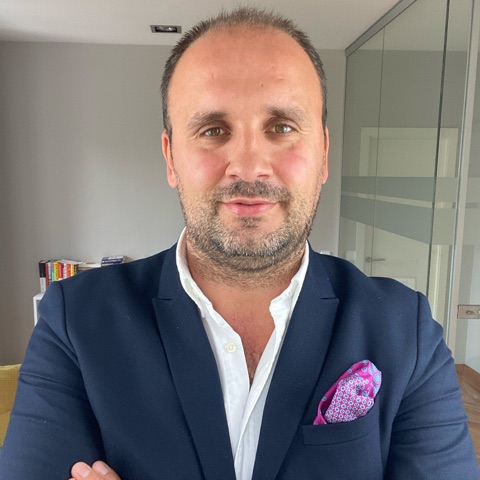
Razvan Toma is the founder of EPR Spain Rep, the authorised representative for packaging in Spain, and of EPR France Rep and EPR Germany Rep. Every page here is written from the BOE, MITECO or the scheme's own published schedule, never from another provider's marketing.
Razvan on LinkedIn ↗